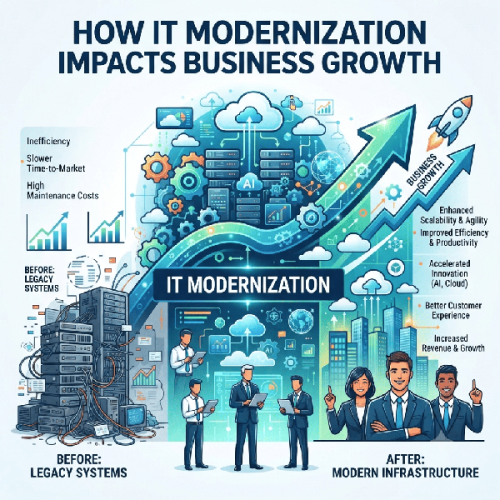
IT modernization is no longer just a technical upgrade to keep the lights on; it is a critical business catalyst. By replacing legacy systems with cloud environments, automated workflows, modern data analytics, and robust cybersecurity frameworks, organizations can unlock operational agility, accelerate innovation, and drive sustainable revenue growth.
Key Ways IT Modernization Drives Business Growth
1. Accelerated Time-to-Market for New Products
Legacy IT systems are notoriously rigid, slowing down product development and release cycles. Modernized IT—powered by microservices, cloud infrastructure, and CI/CD pipelines—empowers development teams to build, test, and launch new features or products in a fraction of the time, helping businesses capitalize on emerging market trends faster than competitors.
2. Enhanced Customer Experience & Engagement
Today's consumers expect seamless, omnichannel, and real-time digital interactions. Modern IT architectures allow organizations to integrate customer data platforms, utilize AI-driven personalization, and maintain high-performing web and mobile applications, directly boosting customer satisfaction, retention, and lifetime value.
3. Optimized Operational Efficiency & Cost Reduction
Maintaining outdated legacy hardware and software incurs massive technical debt, high maintenance overhead, and frequent downtime. Modernizing to automated cloud platforms streamlines internal workflows, eliminates redundant administrative processes, and significantly lowers long-term operational expenditures.
4. Data-Driven Decision Making & Insights
Legacy systems often trap data in isolated silos, making comprehensive analysis nearly impossible. IT modernization unifies data pipelines into centralized cloud data warehouses, enabling leadership to leverage advanced analytics and business intelligence tools for accurate forecasting, risk management, and strategic planning.
5. Strengthened Security & Regulatory Resilience
Outdated software often lacks patches for modern vulnerabilities, leaving organizations exposed to catastrophic cyberattacks and compliance penalties. Modern IT introduces resilient, built-in security frameworks, zero-trust architectures, and automated compliance tracking to safeguard sensitive business and customer data.
Core Pillars of a Successful IT Modernization Strategy
-
Cloud Migration: Transitioning legacy applications and infrastructure to scalable, flexible cloud or hybrid environments.
-
Legacy Refactoring or Replacement: Rewrapping, rebuilding, or replacing aging monolithic codebases into modular, scalable components.
-
Process Automation: Deploying robotic process automation (RPA) and automated workflows to minimize manual tasks.
-
Advanced Integration (APIs): Connecting disparate software tools via secure APIs to ensure smooth cross-departmental data flow.

krishna
Krishna is an experienced B2B blogger specializing in creating insightful and engaging content for businesses. With a keen understanding of industry trends and a talent for translating complex concepts into relatable narratives, Krishna helps companies build their brand, connect with their audience, and drive growth through compelling storytelling and strategic communication.